

Whenever I travel to the Southern U.S., or find a rare spot in a different location, I will likely stop in to a Waffle House restaurant. Oh, I know - I have some friends who would never be caught dead in one; they make jokes about them. But I like them. I like the food, the people, and the atmosphere.
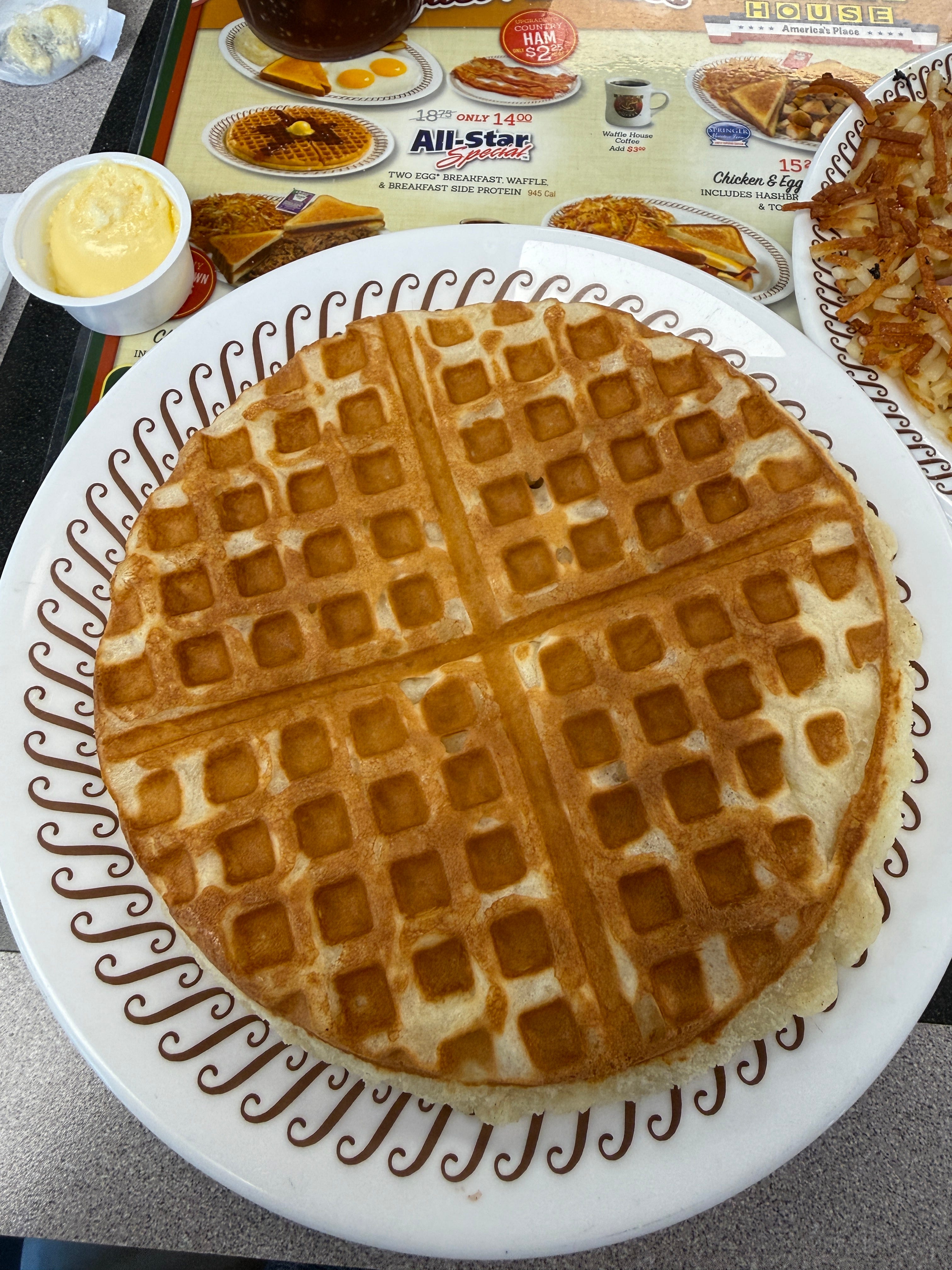
Just last week I ate at a Waffle House in Fort Myers, Florida. I had a waffle, of course, but I also had hash browns that were smothered, covered, and chunked (translation: with onions, cheese, and ham). They are consistent. A waffle in Georgia tastes the same as one in Texas. And they are open 24/7/365, which makes them a popular spot for the late night after-the-bar-closes crowd, or for anyone looking for a bite at an odd time.


Anyone who disparages the Waffle House should look no further than a video on YouTube
featuring chef Anthony Bourdain eating at a Waffle House for the first time. He samples much of the menu with his friend Sean Brock. He says, “It is indeed an irony-free zone, where everything is beautiful and nothing hurts.” He goes on to say, “This is better than the French Laundry, man.”
The fact that they are always open has developed into something interesting — the Waffle House Index (WHI), which measures the severity of a natural disaster, like last week’s hurricane. The Index rates each restaurant green, yellow, or red, indicating that they are fully open, serving a limited menu, or closed. Yellow means that there are significant problems: either they are working without power, or they haven’t received their normal food delivery. A red rating means that there must be unsafe conditions in that area. Looking at the WHI map gives a quick snapshot of the areas that are most affected by a weather event.
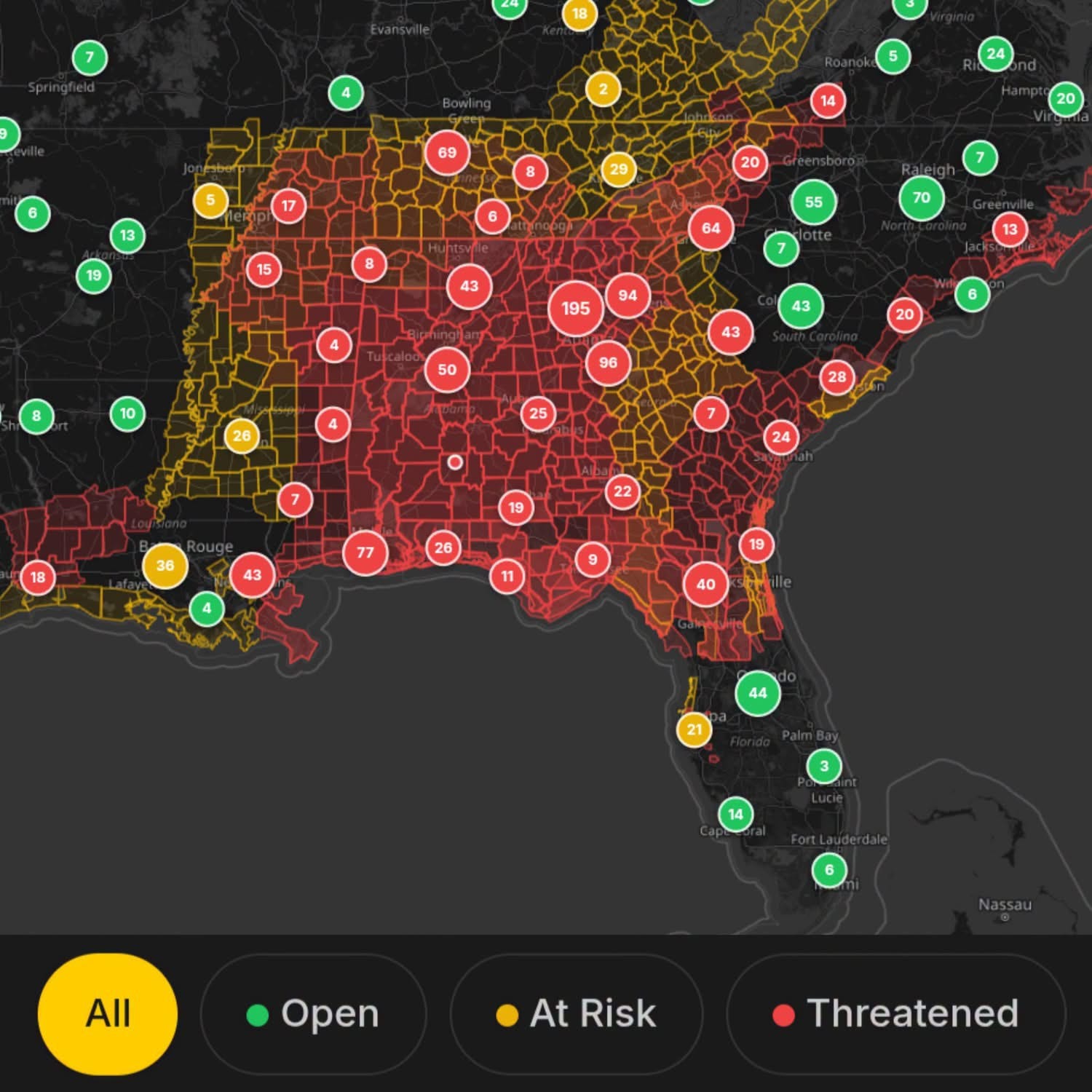
The WHI was developed by Craig Fugate, who was the administrator of Florida’s emergency management in 2004 in the wake of Hurricane Charley. He realized that in many areas the local Waffle House was the only restaurant open for business. Fugate continued to use the Index when he joined FEMA in 2011.
Waffle House has taken their policy of being always open very seriously. They have invested in portable generators, developed a mobile command center, and keep restaurants status updated on their website. Employees go through training on what to do in an emergency, including what items can still be served should they lose electricity.
I enjoy watching the show at a Waffle House. The clients are often colorful characters, and it is amazing to watch the person running the grill. They can get ten or more orders shouted at them, keep them all straight without writing anything down, and serve them in minutes. I honestly didn’t know how they do it, until I found out about the secret code that they use. (Okay, it’s not really secret, but it was news to me.)
It turns out that the employees who work the grill are taught to place markers on each plate as the order is called out. They use condiment packets or ingredients (like jelly packets, butter pats, catsup, etc.) in specific locations to mark the order. For instance, a jelly packet on top of the plate means the order is for eggs sunny-side up. Dry toast is marked (strangely) with a packet of butter under a jelly packet. Two pickles means a breakfast sandwich with bacon. You get the idea — these markers are placed on the plate, and the person running the grill doesn’t have to remember each order, they just follow the code.
It’s reliable, always open, fun, and the food is good. Small wonder that I eat here whenever I can. Oh, and for those who know me well, they serve Diet Coke.
