

As long as I’ve been coming to Mexico, I’ve been hearing about Lucha Libre. It is a kind of wrestling match between competitors in masks, but it has taken on an outsized position in Mexican culture.
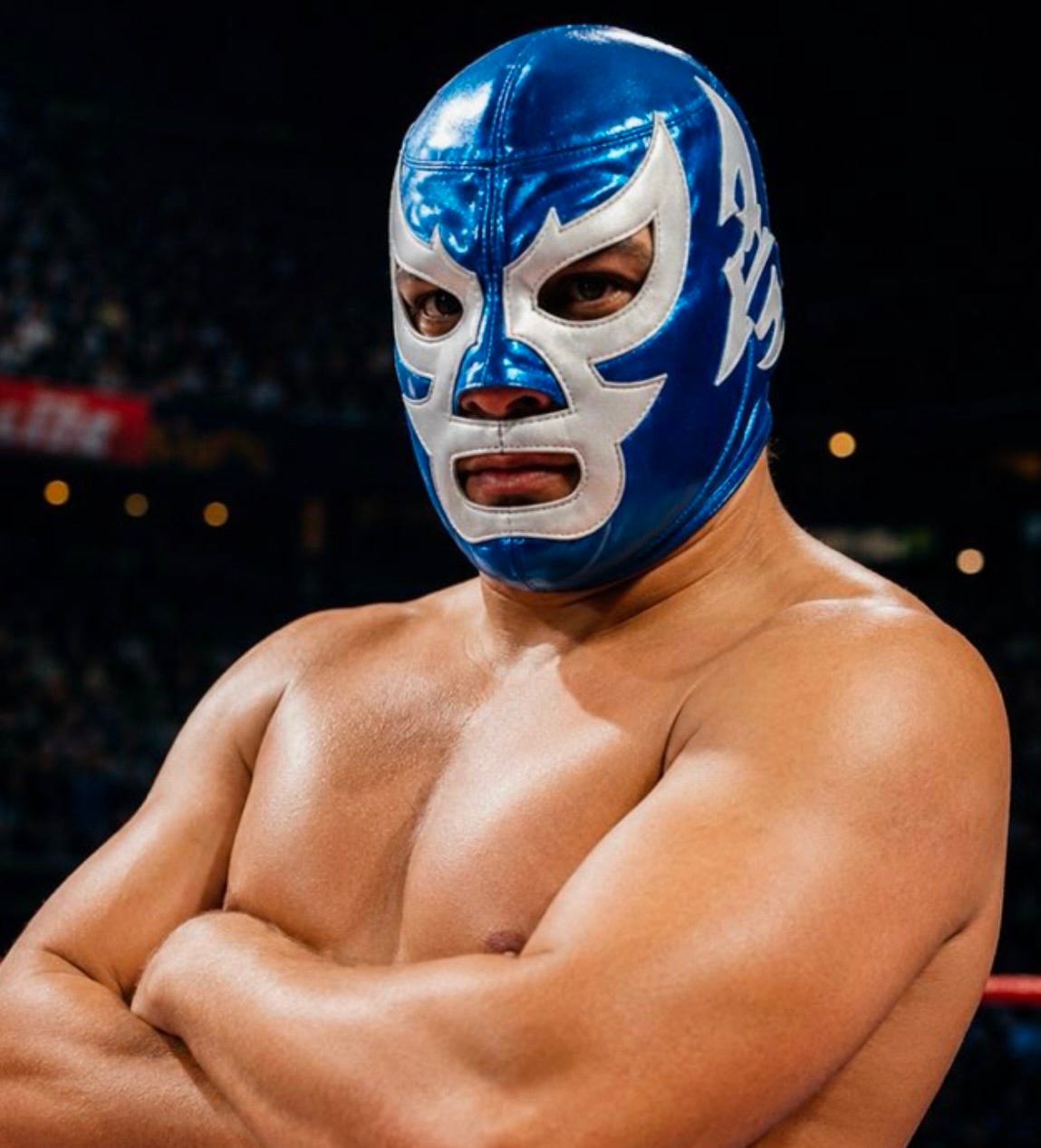
Masks have been a part of ancient indigenous cultures such as the Aztecs and Mayas for centuries. Warriors were trained as Jaguar Knights who wore spotted pelts and masks to frighten their enemies, or Eagle Knights who wore feathered headdresses and masks that had prominent eagle beaks. This history was undoubtedly part of the inspiration for lucha libre.


The sport became popular in 1933, when Salvador Lutteroth González founded the Empresa Mexicana de Lucha Libre (EMLL). Like Big Time Wrestling in the U.S., the athletes are heroes or villains, and the crowds cheer wildly for their favorites. It has become a cross between a soap opera and an athletic event, as each match is staged and conforms to a storyline, but the competitors are doing amazing flips and dives and somersaults while they play their parts. Today, the lucha libre wrestlers are everywhere — TV commercials, print ads, and cereal boxes. Their stories have been turned into comic books, films (you may have seen Jack Black in Nacho Libre) and children’s cartoons.
I tried to see a lucha libre match in Guadalajara last year, but I couldn’t arrange a time to go. This week I finally saw a spectacular show in Arena Mexico, “The Temple of Lucha Libre” in Mexico City, where shows have been performed since 1956. In the match that I attended, the story drew an explicit connection between ancient Mexican creation myths and the roles of the wrestlers. Much like Greek and Roman mythology, the gods of the Aztecs and the Mayans were involved in human disputes or arguments with each other, leading to the showdowns that the wrestlers depicted, and explaining the creation of the sun and moon, corn and the agave plant.


The show itself was wild. The music and drumming was loud and virtually constant, and the crowd cheered and booed with every kick and punch and body-slam. It began with dancers in native dress and a big screen cartoon that explained the story, followed by the wrestling itself. As the drama intensified, so did the drums and the screams and jeers from the crowd. There were families with children having a blast, eating pizza and popcorn while wearing masks that were available for purchase. The high energy show didn’t stop until several matches had been completed and the arena erupted in colored streamers and confetti while the wrestlers received an ovation from the crowd. This was great fun, and is not to be missed if you are in Mexico City.


