

I remember being shown a movie in grade school which depicted “germs” as a WWII-style evil army — an invading force that entered the body through the nose and mouth. These terrible red soldiers were marching through the bloodstream, killing cells and causing havoc. The person who was infected was getting progressively weaker, and the implication was that they would soon be a goner.
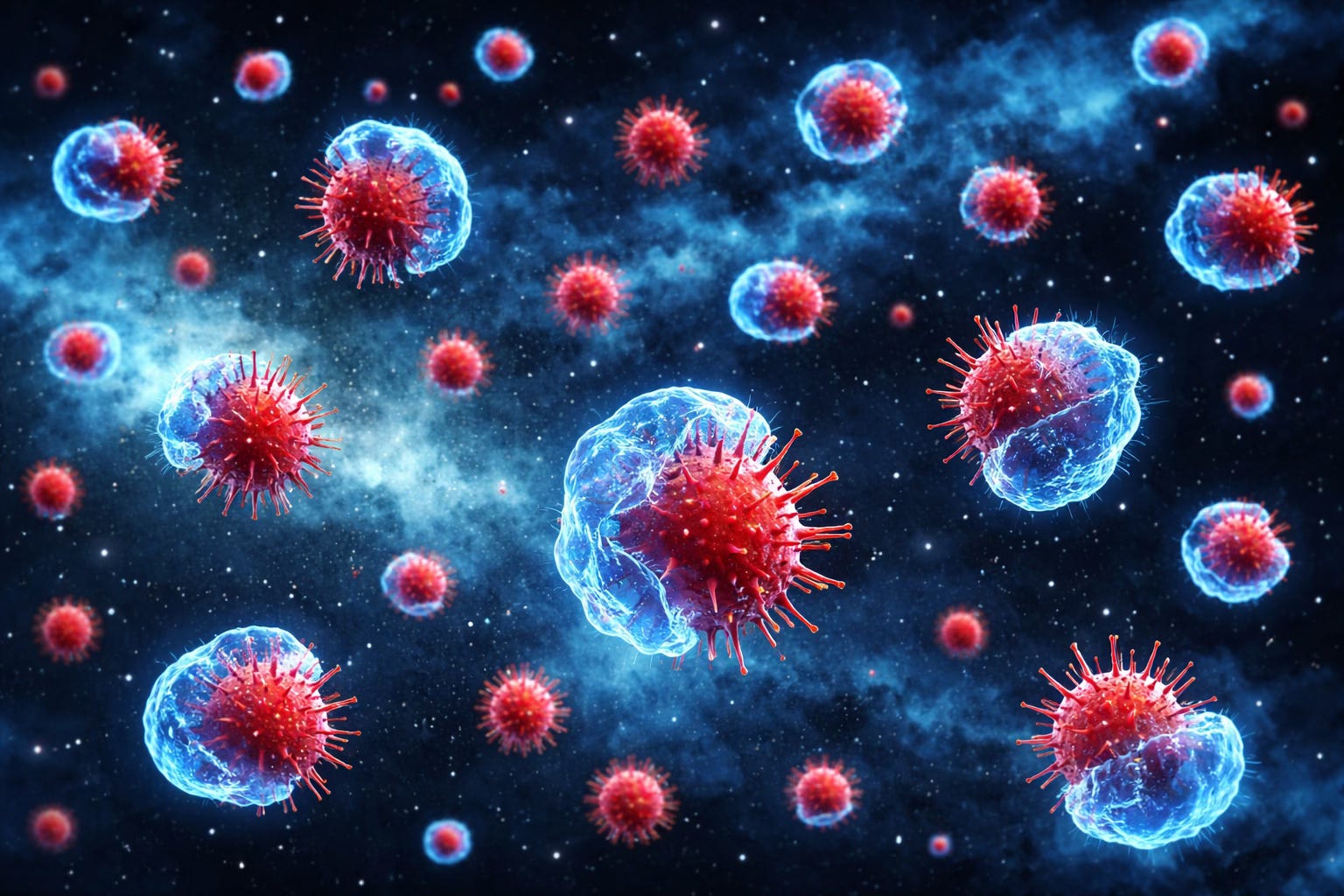
But then — Dat da da da! — reinforcements arrive, in the form of blue blobs that surround the enemy germs like a plastic coating and escort them out of the body. These are the white blood cells and antibodies that comprise parts of our immune system, and the germs are defeated. Miraculously, the infected person is better.
It would be great if our immune systems always worked like that. Sometimes they do, which is a miracle in itself. At other times, though, things get a lot more complicated.
The immune system works in three general ways:
Barriers,
Immediate Defense, and
Adaptive Defense.
Barriers
We don’t tend to give it a lot of thought (at least, I don’t), but our bodies are set up to keep bad stuff out. Our skin is exposed to all kinds of dirt, grime, and gunk, but it keeps that stuff outside us, where it can’t do any harm. The same is true of the mucus in our nose, and the tears in our eyes. They trap elements that we don’t want, and expel them. Even the acid in our stomach prevents some problems.
Immediate Defense
The first line of defense if a bacteria, virus, or fungus enters our system are called macrophages. These white blood cells can recognize and kill germs of various kinds. (Notice that your white blood cell count goes up when you are sick.) Two other kinds of white blood cells work a little differently — B-cells tag the germs with proteins for later destruction, and T-cells kill some of our body’s cells that are already infected. These cells also work on mutations that have become cancer cells.

Adaptive Defense
The immune system also has a memory mechanism that helps it to respond more effectively if a type of germ returns. Some B and T cells become memory cells after an infection, developing proteins that quickly respond to a recognized germ. This adaptive memory can occur naturally with each infection, or it can occur as the result of a vaccine, which simulates an infection and tricks the body into producing memory cells. Vaccines have been tremendously successful in fighting some potentially deadly diseases, such as polio, measles, mumps, and rubella.
Out of the Woods?
Given everything we know about the immune system, and all our medical knowledge about various diseases, we still have a long way to go to improve our public health. Some people are complicating our problems by fighting against the use of vaccines. There is a great deal of misinformation being circulated, some of it from the very government agencies that should be promoting scientific facts. It is frustrating to hear bad studies being cited, and even more frustrating to hear people arguing without any facts at all — just opinions and hearsay.
What can we do?
First, talk to medical experts if you are sick. Then follow their advice. Don’t think that Dr. Google or the latest AI will give you all the information you need.
Second, try to improve your health odds by taking preventative measures:
Exercise
Eat a healthy diet
Get enough sleep
Wash your hands
Get the recommended vaccines
sic
Photo by Brittany Colette on Unsplash

Being sick stinks
It is no fun to be ill. I know — I’ve just recovered from a cold that totally messed up my Christmas and New Years. Despite all the fantastic breakthroughs that medicine has made, they still don’t really know how to stop the common cold. Here’s to your health!
