Before we had railroads, moving goods and people across long distances was extremely expensive. Imagine trying to take a shipment of coal by wagon train. It was in the 1820s that a number of short line railroads were built to connect major cities. The Baltimore and Ohio (B&O) Railroad was the first to use steam engines in the 1830s, replacing horse-drawn railcars.
By 1860, Chicago became the country’s rail center, with access to water ways and a geographic advantage, linking the East and West. Almost immediately, national markets developed for livestock, grains, and other goods. Between 1870 and 1900, Chicago grew from a population of about 300 thousand to nearly 1.7 million.


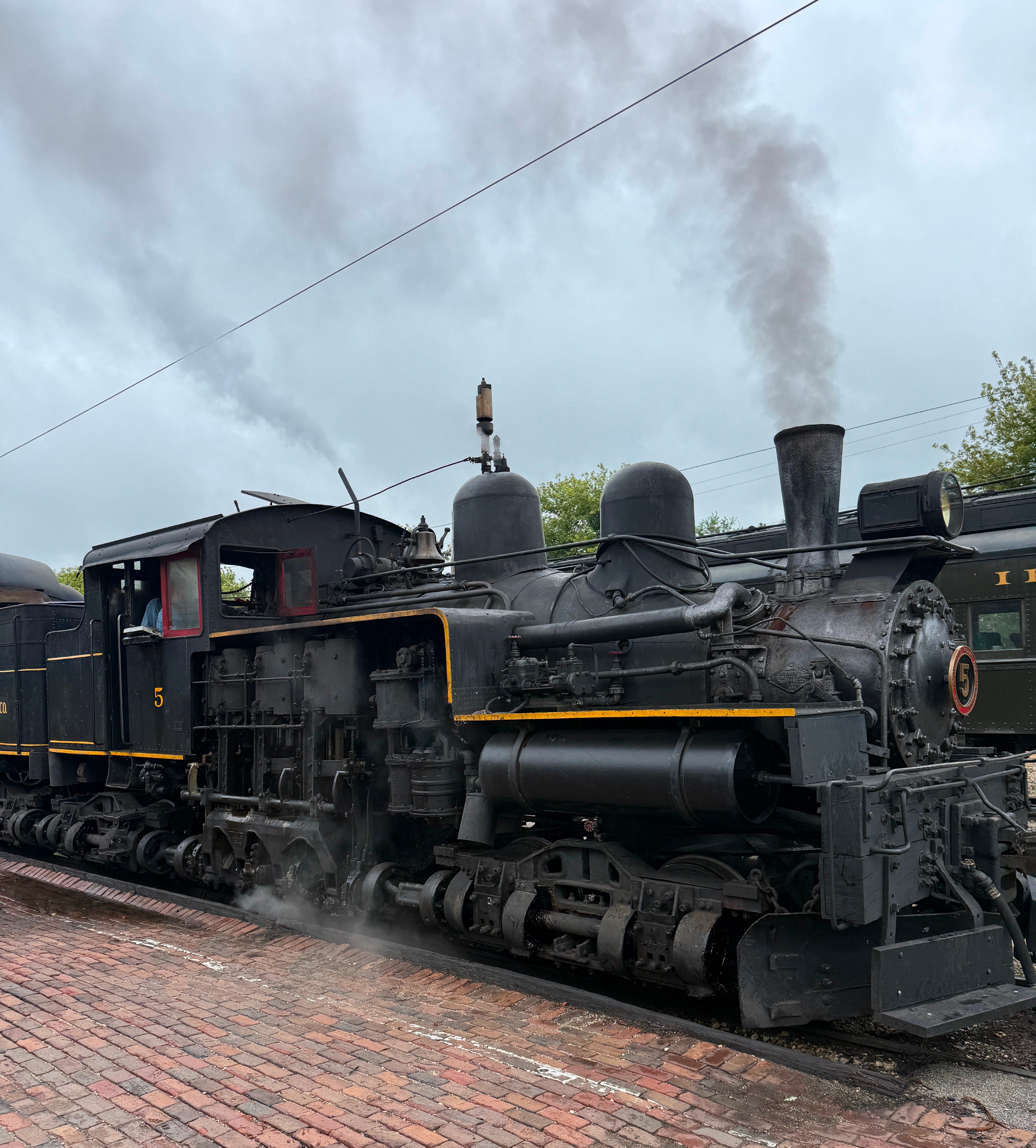
So it is no wonder that one of the finest railway museums in the country is in Union, Illinois, a little more than an hour outside Chicago. It is called the Illinois Railway Museum (IRM), and it is run by volunteers. This is not the kind of museum that just talks about a subject and shows pictures and historical documents. It has all of that information available, but the best thing about this place is that a visitor can experience the trains — you can see, touch, and ride them.
The IRM is located on about 120 acres, and has its own rail spur that is used to take visitors on a 20 mile ride on a steam train in passenger cars that are over 100 years old. Volunteers have refurbished these train cars and all the engines, and new donations of cars and engines are constantly building their inventory of equipment.


Riding in a car pulled by an old steam powered locomotive is an experience for all the senses. It is loud and smoky and there are moving parts everywhere. The ride shakes over the old railroad tracks, and there are steam whistles and puffs of smoke billowing out into the sky.


The museum has exhibits of luxurious private cars built for industrial barons and Pullman cars that took people on overnight trips out west. There are gigantic snowplows that could clear tracks of snow that was 10 feet deep, and single person cars used to speed individuals down the tracks. It includes everything from great freight trains to intercity commuter cars. Some of the exhibits focus on train signal devices, or model trains, or station signage.
If you have an interest in trains, or history, or just want to learn about railroads, this is a great place to visit.