

Gee’s Bend (population 275) is an isolated Black community in Wilcox County, Alabama, near Selma. It is named after the Plantation of Joseph Gee, and many of the residents are from families who were enslaved in earlier generations. I drove to Gee’s Bend once while I was working in Birmingham, and it is hard to get there. There are no bridges in that area over the Alabama River, so you have to drive quite a distance away to connect with the one road that eventually leads you to Gee’s Bend.
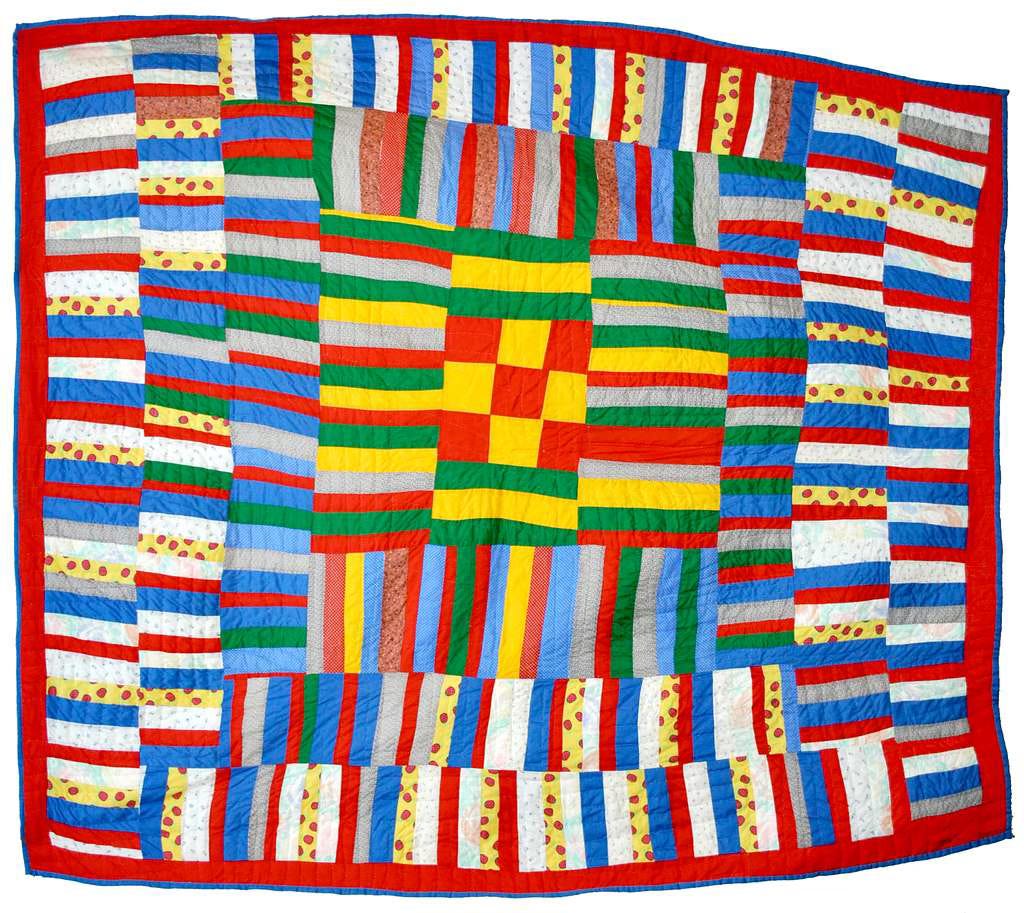
In the 1800s, the slaves working the plantations began to create quilts using old clothes and feed sacks for material. They met in quilting circles and developed a style that included bright colors and geometric shapes. At the time, the quilts were simply functional — a way to keep warm in cold weather, as their homes were unheated.


Racism and white supremacy was rampant in the area. There were at least four lynchings in Wilcox County between 1893 and 1904, according to the Equal Justice Initiative. That problem hasn’t gone away. “There are still lynchings in this county,” a Harvard student who spent a summer teaching college-bound black high school students wrote for the university’s newspaper in 1970. “Within the past two years, a black man has been castrated, a white woman has shot a black male child, and a white doctor who is a member of the KKK has plotted to have the county’s black [federally funded, anti-poverty program] director assassinated.”
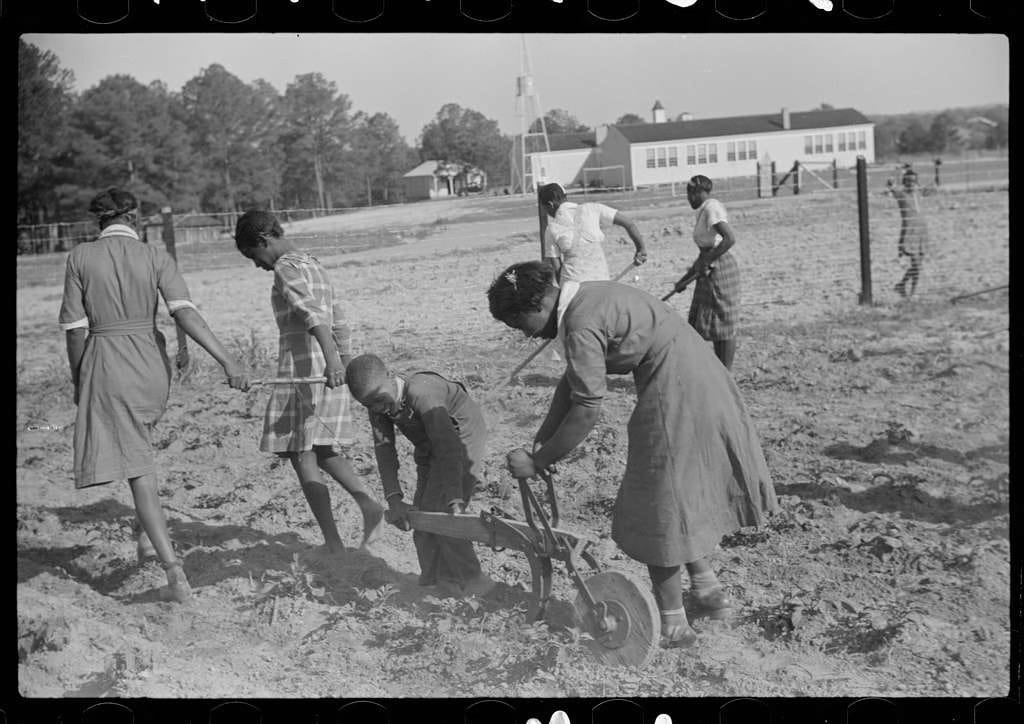
During the 1960s, residents from the area were involved in the civil rights movement, and active in promoting voting rights in Selma. The Freedom Quilting Bee was started in 1966 to help quilters earn income from their work, and quilts began to be sold around the country.
The story goes that art historian William Arnett discovered Gee’s Bend quilts while driving in the area on vacation in 1996. He saw some quilts hanging on a line outside, and asked about them. He spent two years traveling around the area, asking about the quilts and purchasing as many as 560 of them for $200 to $300 a piece. He then organized shows beginning in 2002 that highlighted the quilts in art museums around the country. Prices for the quilts increased enormously. They now sell for thousands of dollars on sites like Etsy.
While the Gee’s Bend quilts were being shown in exhibitions around the country and the works were being recategorized as folk art, the community didn’t have much to show for it.
It is no wonder that in 2007, Arnett was sued by three Gee’s Bend women who said they weren’t properly compensated for their art. The quilts were being reproduced in stores and appearing on U.S. postage stamps. The suits were settled out of court. Not much changed, however. in 2014, Wilcox County made the news as the poorest county in the nation, with Gee’s Bend noted as the poorest section of the county. The median household income in Gee’s Bend is $14,516, according to Census data. A local historian reported in the ‘80s the community was disappointed that interest in the quilts in the sixties hadn’t translated into sustainable change. “Ain’t nothing ever happened,” was what the residents said. In 2017, “Philip Alston, the United Nations special rapporteur on extreme poverty and human rights, visited the region, and told an Alabama news outlet that he had not previously been aware of conditions of this severity in the developed world. A number of homes are without septic systems. The post office was closed some years ago, after the postmaster became ill from black mold.” (The Nation, Oct. 29, 2018, https://www.thenation.com/article/archive/gees-bend-quilt-alabama/)
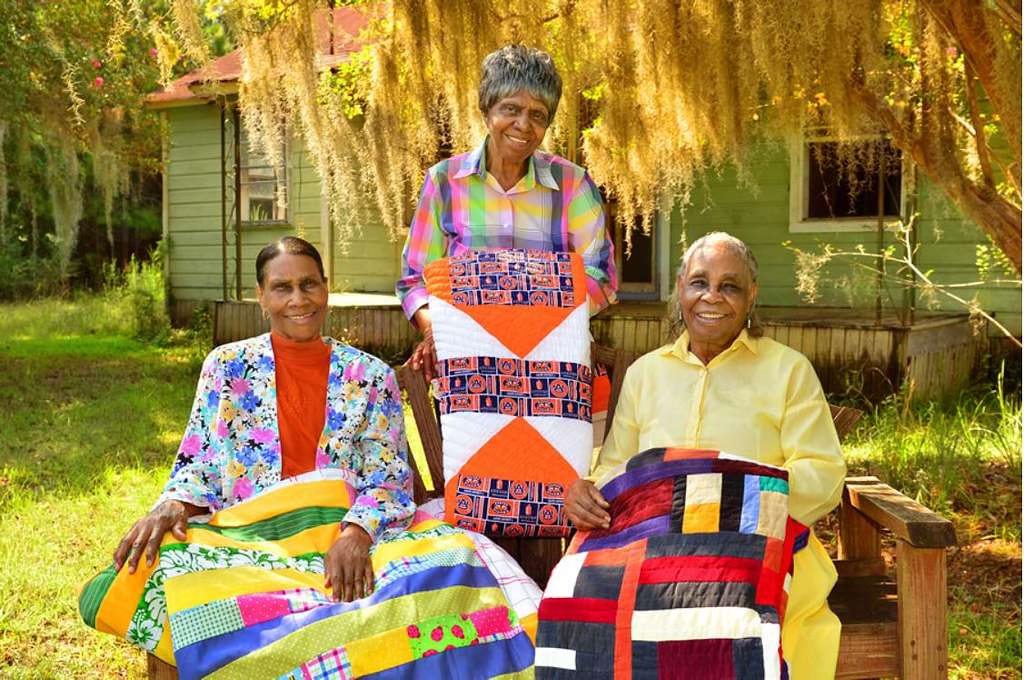
These quilts are now held in high esteem in major museum collections. The women in Gee’s Bend seem better organized today. There are groups like Gee’s Bend Quiltmakers (Gee’s Bend | Souls Grown Deep) and Freedom Quilting Bee Legacy that work to make sure quilters are paid fairly.
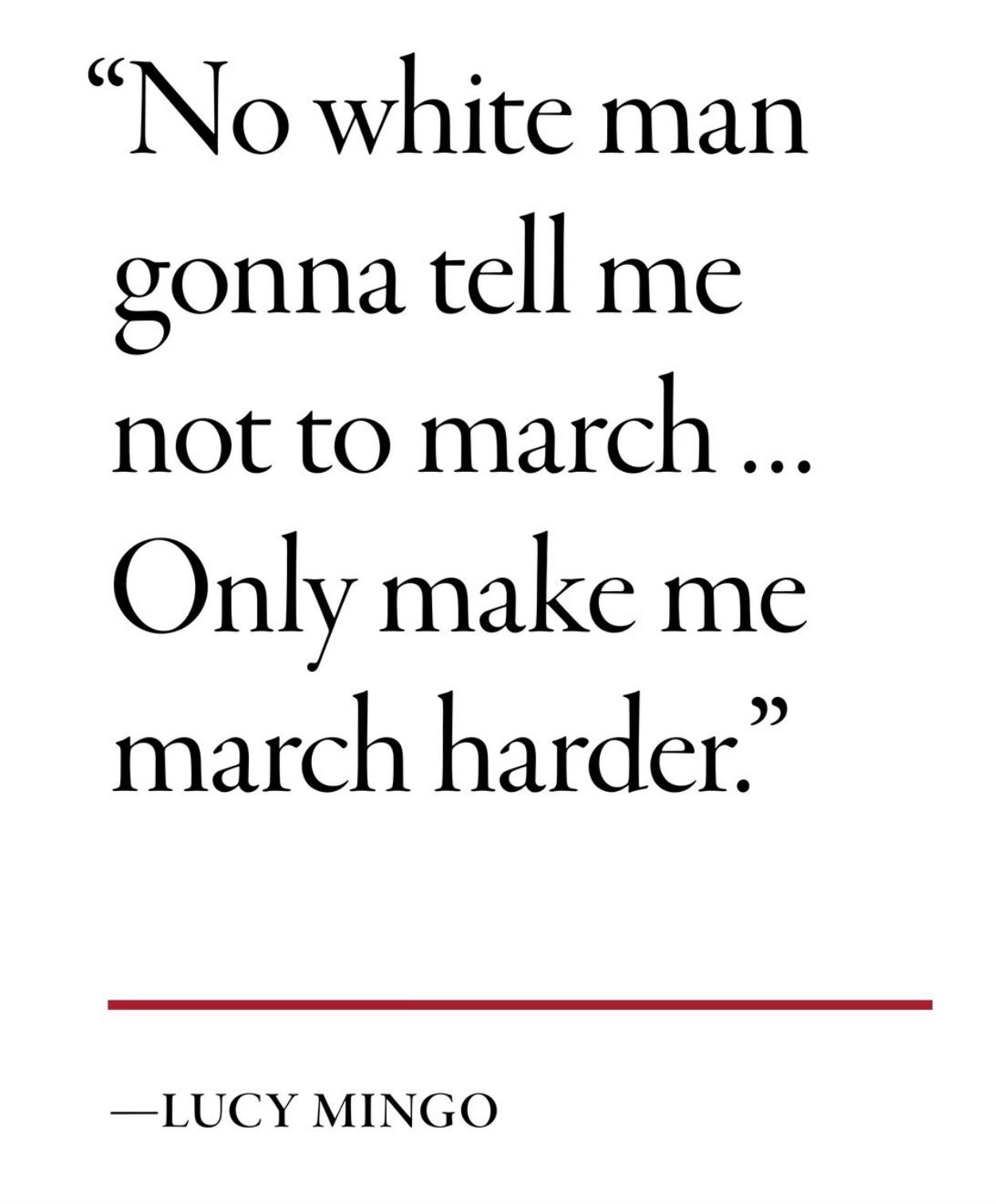
Three of the most respected Gee’s Bend quilters have been awarded 2015 National Endowment of the Arts National Heritage Fellowships: Mary Lee Bendolph, Loretta Pettway, and Lucy Mingo. These women have been quilting most of their lives.
I first learned about Gee’s Bend quilts when I attended an exhibit at the Milwaukee Art Museum. My mother-in-law Gail asked me which quilt was my favorite. The next Christmas, she gave me one of my favorite gifts of all time.
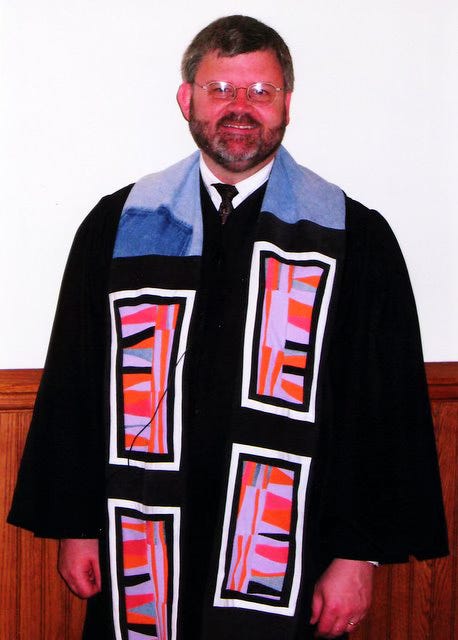
This stole was made from our family’s clothes: old jeans from my son and me, my wife’s shirt, and some of my old shirts. It is special to me, and another indication of how wonderful these works of art are. They are beautiful, but they also incorporate family history, the story of civil rights in the U.S., and Black history.
